Google AI Report
Debates about the ROI of AI often lack a real-world perspective. Google’s recent report, “The ROI of AI 2025,” prompts deeper reflection.
While the data samples from large GCP accounts are valuable, those are often engineering-focused enterprises with a willingness and expertise for in-house tinkering, it’s important to add a caveat: these insights might not universally apply.
My key takeaways
- Focus on positive ROI use cases: As the report confirms, many organizations are finding success with a small number of AI applications. The real challenge is to quickly ditch what doesn’t work and apply successful lessons across the entire enterprise to avoid creating another pile of technical debt.
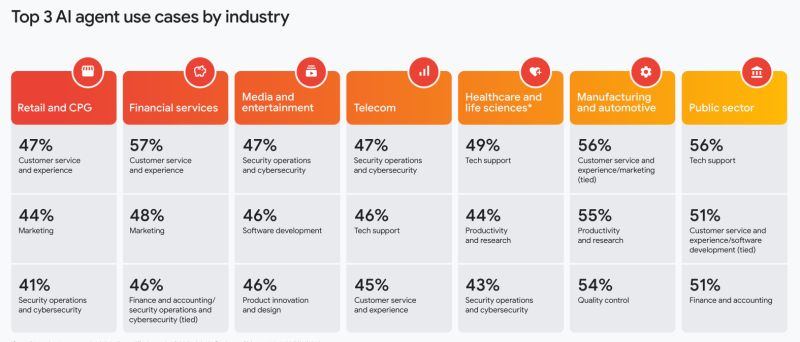
- Sweet spots and the customer satisfaction gap: Help desk and cybersecurity are proving to be sweet spots for AI-enabled automations. Google highlights a significant impact on security, with executives reporting improved posture and faster response times. However, these domains are often cost centers. The true measure of ROI here must include customer satisfaction metrics. Without them, it’s hard to tell if the investment has a positive, sustainable impact on business growth.
- The early adopter’s paradox: Early investments in AI, particularly in rapidly changing fields, can be erased by new breakthroughs. To make these investments last, focusing on API-enabled agents and standardized protocols is key. This approach allows you to “hot swap” the latest technology, reducing time to market for new features without having to rebuild everything from scratch. This applies to both products and cost centers as well, since you usually aim to set it up and forget.
Overall, AI is improving cost centers, but a lot of the gains are not commodities yet, so identifying true returns beyond surface level is challenging. If you want to maximize value, regularly assess AI ROI with relevant metrics, adjust strategies based on outcomes, and ensure that AI projects remain aligned with measurable business goals.