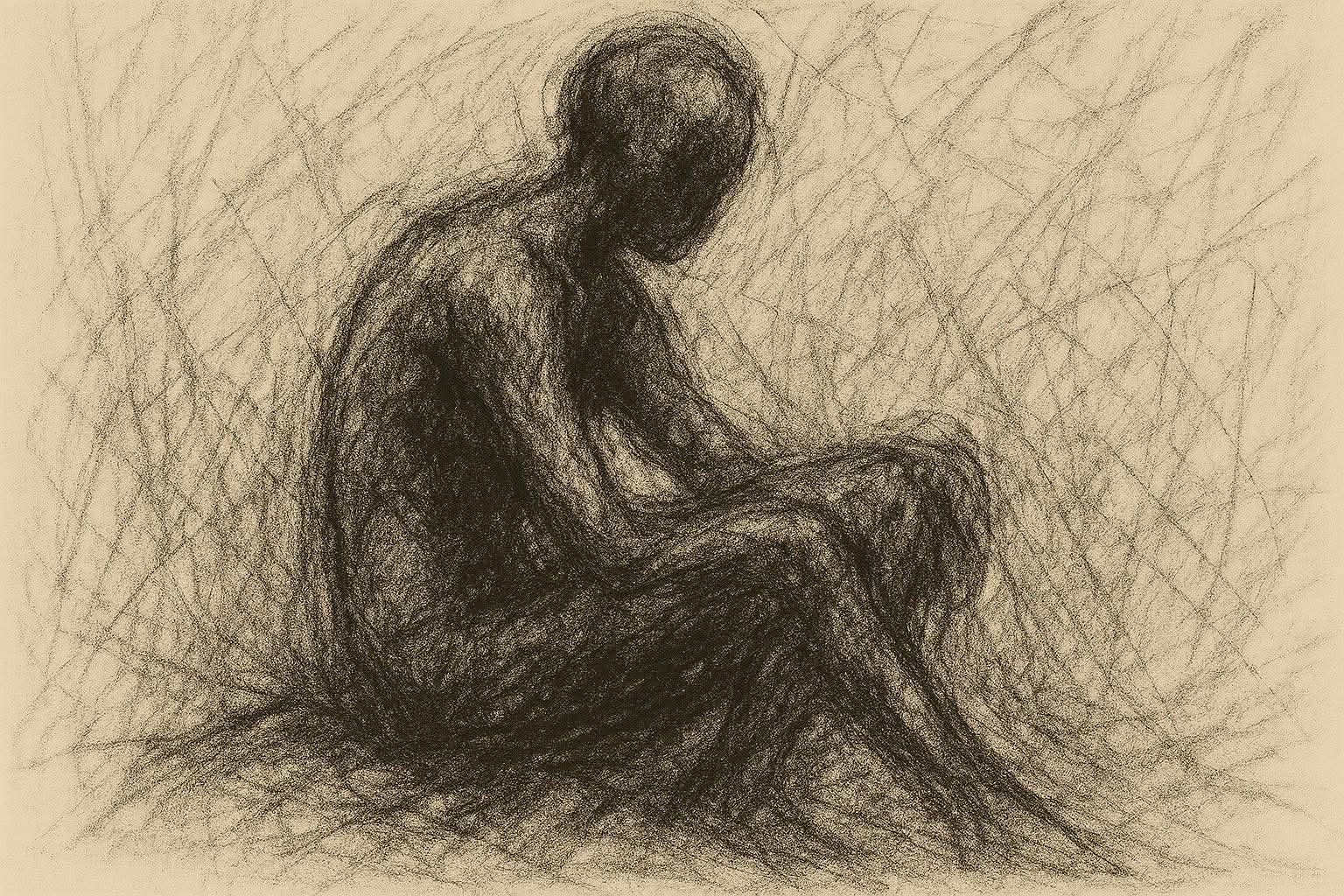
Man
A durable political myth separates early Soviet history into two chapters. In the first, Vladimir Lenin leads a flawed yet idealistic revolution on behalf of workers and peasants. In the second, Joseph Stalin hijacks that project and turns it into a paranoid dictatorship. Historians like Richard Pipes and Stephen Kotkin, alongside camp survivors Aleksandr Solzhenitsyn and Varlam Shalamov, dismantle that myth by showing how Stalinism grew straight out of Lenin’s foundations. Kotkin’s archive-driven focus on communist ideology and statecraft, paired with Solzhenitsyn and Shalamov’s firsthand accounts of early Bolshevik terror, demonstrates that Stalin simply carried Lenin’s system to its logical conclusion.
Lenin’s favorable reputation survived largely because later political actors needed it. After Stalin died in 1953, Soviet leader Nikita Khrushchev denounced Stalin’s purges while trying to preserve the legitimacy of the Communist Party. Khrushchev invented a sharp boundary between a wise, humane Lenin and a monstrous Stalin, a narrative that exiled rivals like Leon Trotsky and Western sympathizers had already promoted for decades. Decades later, Mikhail Gorbachev revived this exact formula during perestroika in the late 1980s, calling for a return to true Leninist ideals so he could reform the failing Soviet economy without abandoning socialism. The historical record from 1917 to 1922 tells a much harsher story, as Lenin built every institutional and legal weapon Stalin later wielded.
Within months of taking power, Lenin destroyed Russia’s fragile democratic institutions and silenced all opposition. When the Bolsheviks lost the national election in January 1918, Lenin sent armed guards to shut down the parliament after a single day. He swiftly banned independent newspapers and outlawed rival socialist parties. At the same time, he established the Cheka, a political police force operating entirely outside the law, and replaced traditional courts with tribunals guided by revolutionary conscience. By August 1918, Lenin was issuing explicit orders to lock up unreliable citizens in concentration camps outside major cities, creating the camp network that evolved into Stalin’s Gulag.
Lenin also pioneered the state’s war against the countryside and its intolerance for internal dissent. During the Russian Civil War, his armed detachments raided villages to seize grain by force. When starving peasants revolted in the Tambov province in 1920 and 1921, Lenin authorized poison gas, mass hostage-taking, and village burnings to crush the uprising. That same year, after crushing a rebellion of disillusioned sailors at the Kronstadt, Lenin passed a strict ban on factions inside the Communist Party, giving Stalin the exact procedural tool he later used to destroy his political rivals.
In The Gulag Archipelago, Aleksandr Solzhenitsyn used survivor testimonies and early Soviet decrees to prove that mass terror began under Lenin. Solzhenitsyn rejected the division between Lenin and Stalin as a self-serving lie, arguing that Marxist ideology acted as a moral poison from the very first day of the revolution by convincing officials that mass murder served a higher historical good. Although Solzhenitsyn disagreed with Richard Pipes’s argument that Bolshevism merely revived old Tsarist autocracy, he agreed wholeheartedly that Lenin and Stalin formed one continuous chain of totalitarian violence. In Solzhenitsyn’s view, Lenin planted the poisoned tree of ideological terror, and Stalin harvested its fruit.
Varlam Shalamov, author of Kolyma Tales, arrived at the exact same verdict through his own brutal experience. Arrested in 1929 for distributing Lenin’s critical notes about Stalin, Shalamov entered the prison system as a young left-wing idealist who believed Stalin had betrayed Lenin’s revolution. Nearly seventeen years in the forced-labor camps cured him of that illusion. Having begun his sentence in an early offshoot of Lenin’s camp network before enduring Stalin’s Arctic mines in Kolyma, Shalamov saw firsthand that both leaders relied on the exact same machinery of terror. He realized that Lenin and Stalin shared a fundamental contempt for traditional morality, independent law, and individual human life, viewing ordinary people as disposable raw material to be broken and reshaped by state violence.
Stephen Kotkin reaches the same conclusion of continuity through secret Politburo records and an analysis of modern state power. Like Solzhenitsyn and Shalamov, Kotkin rejects Pipes’s claim that ancient Russian culture doomed the country to dictatorship, showing instead that Stalin was a committed Marxist-Leninist true believer who took Lenin’s ideas seriously. This becomes unmistakable during the economic crisis of the late 1920s. Defenders of Lenin often point to his 1921 New Economic Policy, which permitted small private farms and businesses, as proof that he favored a gentler path to socialism. Kotkin demonstrates from Lenin’s own writings that this policy served strictly as a temporary tactical retreat forced by economic ruin and peasant rebellions. By 1928, that mixed economy had stalled, leaving cities short of grain and starving the state of capital needed to build heavy industry in a hostile world. When Stalin launched forced collectivization and rapid industrialization in 1929, he fulfilled Lenin’s long-term goal of eliminating private property in the countryside using the ruthless methods Lenin had already established.
Even the personal friction between the two men at the end of Lenin’s life reflects a struggle over power rather than principle. After a series of strokes left Lenin incapacitated in 1922, he dictated notes criticizing Stalin’s rudeness and recommending his removal as General Secretary. Later observers treated those notes as a deathbed warning against Stalinism, just as the young Shalamov once had. Kotkin strips away that romantic reading, noting that Lenin never objected to Stalin’s brutality or political repression, having promoted Stalin precisely because he was ruthless. Their final clash centered on control of the party machinery while Lenin was dying, leaving intact their shared commitment to one-party dictatorship.
Combining Kotkin’s analysis of Soviet statecraft with the hard-won testimony of Solzhenitsyn and Shalamov removes the illusions that shielded Lenin’s reputation for generations. Lenin constructed a police state dedicated to destroying private property and eliminating class enemies by any means necessary, and Stalin possessed the relentless willpower to finish that project regardless of the human cost. Stalinism was the destination built into Lenin’s tracks from the start, representing the faithful fulfillment of his central ideas.