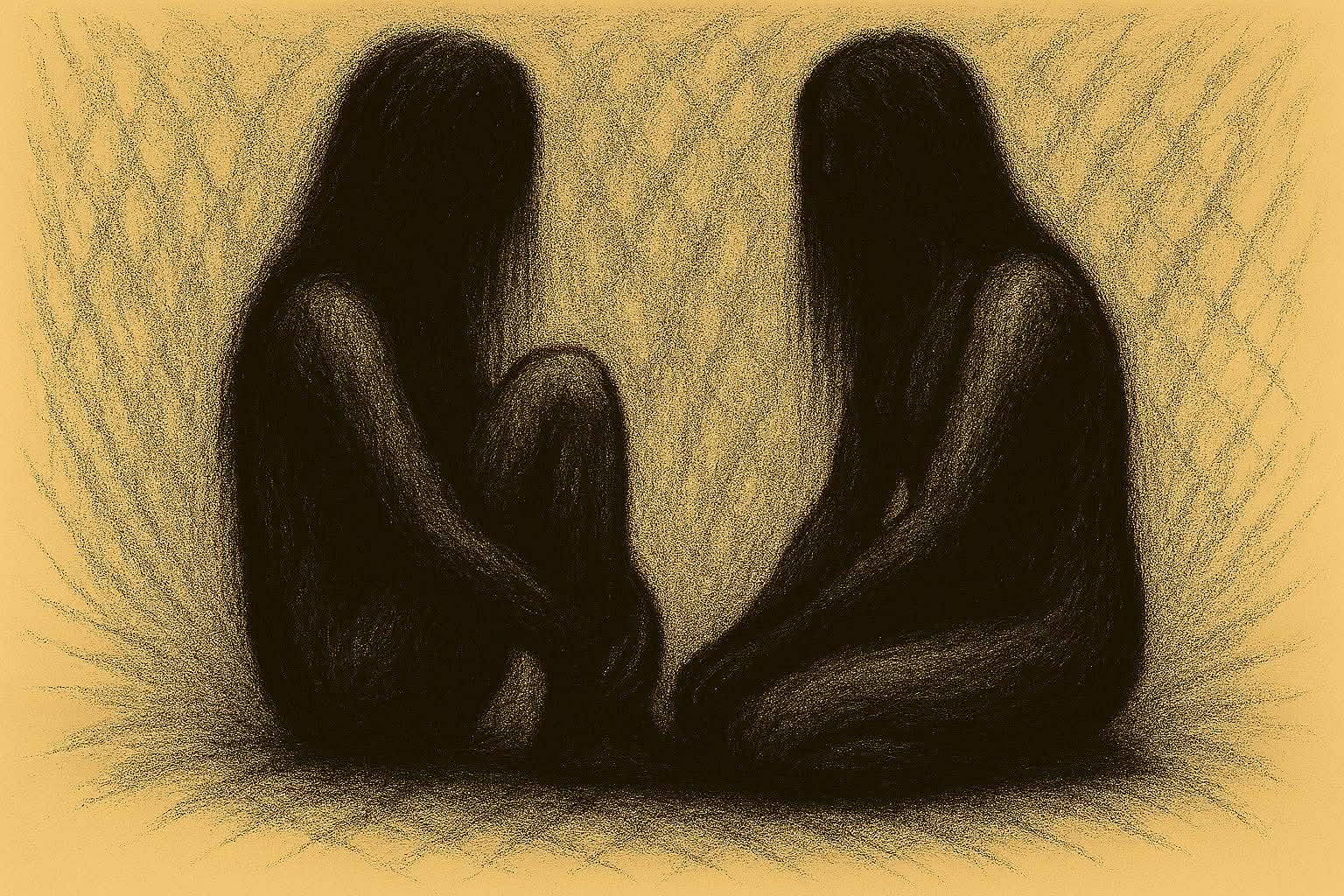
Sadness
Aleksandr Solzhenitsyn was not merely a survivor of the soviet labor camp system. He was a witness to the moral collapse of the twentieth century. His importance today does not stem solely from his historical accounts of the gulag, but from his understanding of how individual choices sustain or dismantle totalitarian systems of oppression. By examining his views on the human condition and the nature of truth, it becomes clear why his voice remains a necessary corrective to modern political and social discourse.
The internal border of morality
One of the most significant contributions Solzhenitsyn made to philosophy was his rejection of the marxist idea that evil is a product of social class or economic structures. In his seminal work, The Gulag Archipelago, he observed that the line dividing good and evil does not lie between states, classes, or political parties. Instead, it cuts through every human heart.
Internal reformation. This perspective shifts the focus from external revolution to internal reformation.
Humanization. It prevents the dehumanization of political opponents by acknowledging that the capacity for cruelty exists within everyone.
Accountability. It demands individual accountability rather than allowing people to hide behind collective labels or historical inevitability.
The architecture of the lie
Solzhenitsyn argued that communism and other forms of totalitarianism were not just failed economic experiments, but systems built on a foundational lie. He believed that violence can only be maintained through falsehood. When a government uses force to control its people, it must also invent an ideology to justify that force.
His famous directive, live not by lies, provided a practical method for resisting tyranny. He suggested that if every individual simply refused to participate in the state sanctioned lie, the system would lose its power. This was not a call for violent uprising, but for a quiet, stubborn adherence to reality. For Solzhenitsyn, truth was not a subjective preference, but a metaphysical necessity for human survival.
The intellectual blind spot
The history of the twentieth century is marked by a strange phenomenon where many of the world’s most celebrated intellectuals defended regimes that were actively murdering their own citizens. Figures like George Bernard Shaw dismissed reports of famine as nonsense, while Lincoln Steffens famously declared that he had seen the future and it worked after visiting the soviet union.
Many western thinkers suffered from a moral double standard. They were often acutely sensitive to the flaws of capitalist democracies but willfully ignored the mass graves of the east. Solzhenitsyn matters because he shattered this delusion. He forced the western world to confront the fact that their progressive ideals were being paid for with the blood of others.1 This critique serves as a permanent warning against prioritizing abstract ideology over the reality of human suffering.
The meaning of suffering and history
The contrast between Solzhenitsyn and his contemporary, Varlam Shalamov, highlights a deep divide in how we process trauma. Shalamov, who also survived the camps, believed that the experience was purely destructive and that the suffering had no higher purpose. Solzhenitsyn, however, offered a more complex and controversial view.
He famously wrote, bless you, prison, for having been in my life. This was not an endorsement of the gulag but a recognition that the extremity of the camp stripped away his arrogance and forced a spiritual awakening. He believed that on the rotting straw of a prison cell, a person could finally discover their true character. Yet, Solzhenitsyn was humble enough to recognize the limit of this perspective. He acknowledged the silent voices of the millions who died, who would answer his blessing by saying, it is easy for you to say, since you stayed alive.
The survivor’s debt. He understood that his ability to find meaning was a privilege of survival. He did not sanitize the horror but instead used his survival as a platform to speak for those who were silenced.
History as a lesson. He viewed history as a series of moral lessons that a nation must learn to avoid repeating its mistakes.
The spiritual battle. He believed that the struggle for human dignity is a spiritual battle that transcends political systems.
The necessity of reckoning. He emphasized that without a genuine reckoning with the horrors of the past, any future progress would be hollow.
Conclusion
The reason Solzhenitsyn matters today is found in his unwavering defense of the individual soul against the crushing weight of the collective. He reminds us that the health of a society is not measured by its economic output or its political efficiency, but by the integrity of the individuals who comprise it. While he recognized that he was lucky to have survived to tell his story, he transformed that luck into a moral duty. He showed that even the most powerful empire cannot survive the courage of a single person who chooses to speak the truth. In an era where truth is often treated as a tool for power, his insistence on objective morality remains a vital anchor for humanity.
cf. Albert Camus “Every false idea ends in blood, but it’s always someone else’s blood.” ↩︎